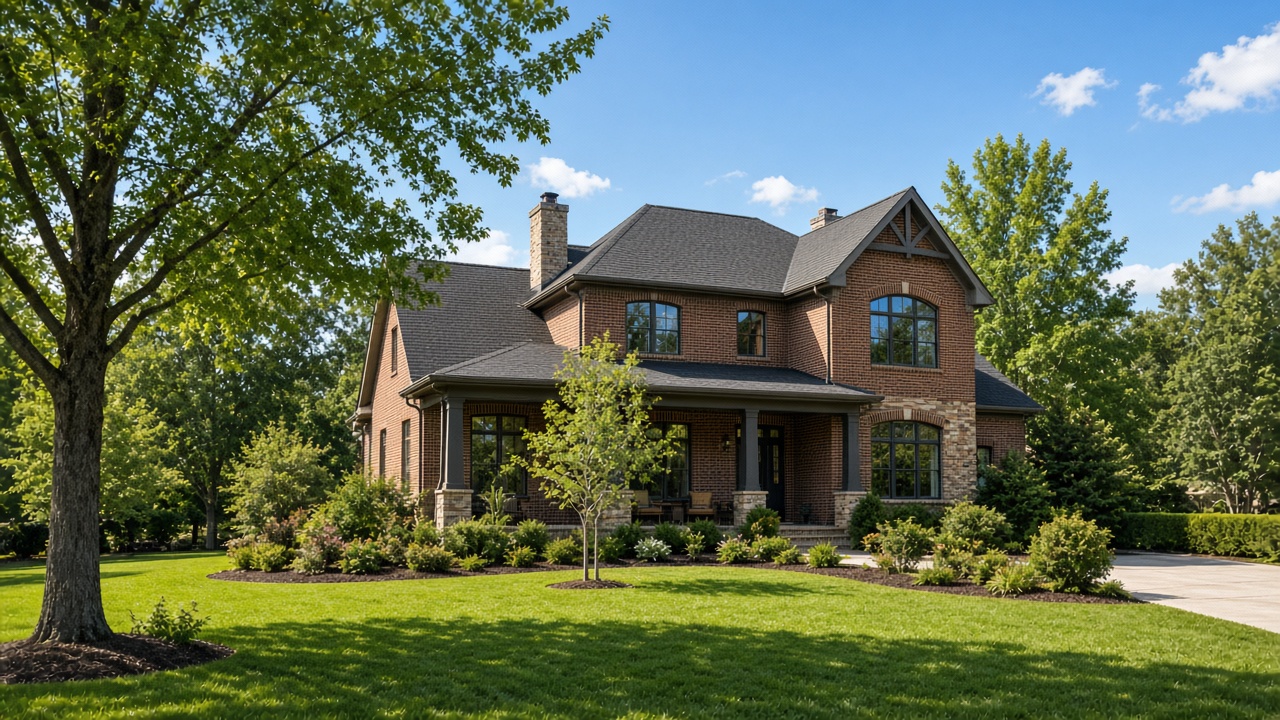
Cash-Out Refinance in Greenville, SC: Free Up Cashflow
Cash-Out Refinance in Greenville, SC: Free Up Cashflow
If you searchedcash out refinance Greenville SC, you're usually after something simpler: high-interest balances gone and a month that finally breathes.
If credit cards and other high-interest debt are sucking you dry every month in Greenville, you're not alone. A lot of Upstate homeowners are sitting on solid equity and still feeling squeezed by the middle of the month.
A cash-out refinance is one way to use that equity — wipe out the high-interest balances, and put more of your paycheck back in your pocket.
Let's get a feel for how much cash flow could improve using your equity. If the math seems to make sense, we can look at wiping out that high-interest debt. Estimate path first — not a rate quote.
If you own in Greenville, Greer, Simpsonville, Mauldin, or elsewhere in Upstate SC, you may have more equity than you realize. That equity can help wipe out credit cards and other very high-interest debt so your paycheck goes further. The cash flow that frees up can surprise you — and instead of sending it to the banks as interest, you can redirect it toward investments that actually grow for you.
I'm Jim Duffy with ALCOVA Mortgage. South Carolina homeowners. Cashflow math first.
When Greenville homeowners use equity to pay off debt
Most folks who ask me about a cash-out refinance in Greenville aren't trying to redo the kitchen. They want money left at the end of the month.
It's a familiar pattern. Decent job. House payment that still works. And a stack of credit cards — maybe a personal loan, maybe a car note — all due before the next paycheck lands.
You can make good money in Upstate SC and still feel broke by week three. That's usually astructure problem, not a willpower problem. Income is what hits the account. Cash flow is what's still yours after every bill that cannot wait.
Home equity tends to help when:
Credit cards and other high-rate debt are sucking you dry every month
You've got enough equity to work with and still leave a cushion in the house
You're ready to stop running the cards back up after they're paid off
You'd rather write one payment than chase five due dates
Here's the part people gloss over: paying off a card with equity doesn't make the debt disappear. You move it. The monthly payment often drops a lot — but that debt is now tied to your house. Miss the new house payment, and you're putting the home at risk, not just your credit score.
That trade can still be a big win when the interest savings are real and the new payment fits your life. It's a bad trade when the only win is a smaller payment this month and a longer bill you can't walk away from.
In South Carolina, closings usually involve an attorney. That's normal here — just build it into timing and cost when you compare options.
Cash-out vs keeping your rate (home equity loan / HELOC)
A lot of articles on cash out refinance Greenville SC jump straight to "replace the whole mortgage." That isn't always the smartest move.
If you locked one of thosesuper low rates from 2020–21, replacing the whole loan just to clear credit cards can be the expensive way to fix the problem. I wrote about that inDon't Replace Your Mortgage. Restructure Around It.
A cash-out refinancereplaces your current mortgage with a new, larger one. Your old loan gets paid off. High-interest debts can get paid at closing. You end up with one house payment. That can make sense when:
Your current rate isn't one of those super low rates from 2020–21
You want one payment and one loan
The new payment, after rolling in the high-interest debts, frees up cash flow
You can restart a new 30-year fixed for the lowest payment — or we can look at options that match the years you have left (owe 21 years? We can look at a new 21-year term)
A home equity loan or HELOCis a second loan against the house. Your first mortgage stays put — including that low rate, if you have one. You borrow against equity just to wipe out the expensive stuff. That can make sense when:
Your first mortgage is already the cheapest money you have
You only need enough to knock out specific balances
You don't want to give up a rock-bottom first mortgage rate just to clear the cards
Nothing is automatic. Some Greenville and Greer owners should cash out. Some should keep the first mortgage and add a second. Some should leave the house alone and chip away at one balance the hard way. Let the math decide — not the brochure.
Don't start with the product. Start with the month.
If you're comparing Upstate to the coast, theCharleston cash-out refinancepage walks the same cashflow test for Lowcountry owners. Greenville home equity credit card payoff and Upstate SC debt consolidation refinance are really the same question with different zip codes.
Run the monthly cashflow math
Before you shop rates or sit through three lender pitches, put your real numbers side by side.
Add up what you pay now on the debts you actually want gone — credit cards first, then other high-interest loans stacking on top of everything else.
Note what your home is roughly worth and what you still owe on the mortgage.
Compare that total monthly load to one new payment under a conservative assumption.
That's what the FreeUpCashFlow calculator is for. Home value. Mortgage balance and payment. The debts you'd roll in. You can uncheck anything that shouldn't go on the house — a car loan with a clear finish line is different from a credit card that never ends.
It takes about a minute. It's an estimate, not a quote. Closing costs, taxes, insurance, credit, appraisal, SC attorney fees, and loan program rules all change the real number. Stretching debt over more years can mean more total interest even when the monthly payment drops. Both belong in the decision.
What you get for that minute: a clear picture of whether this could free real money in your month — or whether you should leave it alone. If the number looks strong, we talk. If it doesn't, you didn't waste a weekend filling out a loan app.
Who this is for / who should wait
This may be a strong fit if:
High-interest debt is what's killing Greenville cash flow
You have real equity and can still leave a cushion in the home
Your income and payment history can support a loan review
You're ready to change the habits that built the balances — not just move them onto the house
You understand the debt would now be secured by your home
Wait (or look at a different path) if:
You still have a 2020–21-style low mortgage rate and a second loan might clear the cards without touching it
You're about to sell, move, or take an income hit that makes a new long-term loan a poor fit
After honest inputs, the calculator barely frees anything in the month
You'd have to borrow almost every dollar of equity to make it work
The plan only works if the cards stay at zero forever with no change in spending
A clear "not worth it" from the math is useful. It's cheaper than a loan that only looks good on the first statement.
Greer, Simpsonville, Mauldin, and the rest of Upstate SC face the same questions. Home values and balances differ. The decision doesn't.
Next step in South Carolina
I help South Carolina homeowners through ALCOVA Mortgage. We lend in South Carolina, Georgia, and Florida — not nationwide.
Here's the simplest next step:
Run the FreeUpCashFlow estimatewith real balances — not the balances you wish you had.
If the monthly difference is big enough to care about, we talk it through: cash-out versus keeping your rate, what closes in SC (including attorney closings), how much equity to leave in the house, and whether a 30-year payment or a shorter term matching what you have left fits better.
Treat this as general information until credit, income, the property, and program guidelines are verified.
The search phrases are loud. The question that actually matters is simple:what would it take for your paycheck to go further?
FAQ
How much equity do I need for a cash-out refinance in South Carolina?
There's no one magic number. Lenders look at how much you'd owe after the new loan versus what the home is worth, plus credit, income, and the property. Most people should leave a cushion in the house — not borrow to the edge. Run your home value and mortgage balance through thecalculatorfor a rough sense of room, then confirm what a real loan program allows. That estimate is not an approval.
Does a cash-out refinance replace my whole mortgage?
Yes. A cash-out refinance pays off your current first mortgage and replaces it with a new, larger loan. If you love your current rate and only need money to wipe out credit cards, ask whether a home equity loan or HELOC — keeping the first mortgage and adding a second — fits better before you replace everything.
Can I pay off credit cards at closing with a cash-out refinance?
Often, yes — when the loan is set up that way and underwriting supports it. The high-interest debts can be paid at closing so the money doesn't hit your checking account and "maybe" get used later. That still turns credit card debt into debt tied to your home. Confirm which balances can be paid off and how it works before you sign.
What if my mortgage rate is under 4%?
Then replacing the whole first mortgage deserves a hard look. A rate that low is doing a job for you. Rolling cards into a cash-out that erases that rate can raise your housing cost even if the total of all your payments looks cleaner. A second loan that leaves the first mortgage alone is often the first option to model. SeeDon't Replace Your Mortgage. Restructure Around It.
Should I start a new 30-year loan or match the years I have left?
Both are worth modeling. A new 30-year fixed usually gives you the lowest payment — useful when freeing cash flow is the goal. Matching the remaining term (for example, 21 years left → a new 21-year term) can keep you closer to your original payoff date, with a higher payment than a full restart. Run both against your real balances before you pick a product.
Is the FreeUpCashFlow result a loan quote?
No. It's an estimate that compares what you pay now to an illustrated new payment. It is not a commitment to lend, an application, or an offer of a specific rate. Real terms depend on credit approval, income and property checks, closing costs, and program guidelines.
Want to see what your month could look like?
Run the FreeUpCashFlow calculator →
Takes about a minute. If the number is interesting, we talk. If it isn't, you know — without the paperwork. Related reading: South Carolina cash-out refinance guide and free up monthly cash flow with home equity.
Jim Duffy
Loan Officer, ALCOVA Mortgage
NMLS #35122
(843) 735-0865
Compliance:Estimate only — not a rate quote, commitment to lend, application, or offer of credit. All loans subject to credit approval, income and property verification, and program guidelines. Rolling consumer debt into a mortgage or home-equity product secures that debt with your home. Estimates compare current monthly payments to an illustrated new payment and do not show total interest over the life of the loan, which may be higher when balances are spread over a longer term. Available where ALCOVA Mortgage / FreeUpCashFlow originates in South Carolina, Georgia, and Florida. Equal Housing Lender. ALCOVA Mortgage, LLC, NMLS #40508.