Spartanburg, SC Cash-Out Refinance: Free Up Monthly Cash
You've got a good job, whether it's at the plant, at the hospital or in a classroom in Boiling Springs or Duncan. The mortgage on your place in Lyman or Converse Heights is fine. What's sucking you dry every month is everything piled on top of it: the truck payment, the cards that never go lower, and the personal loan from a rough year. You get paid, and a week before the next check you're short again.
If you're looking into a cash-out refinance in Spartanburg, SC, this page is about one thing. If you paid off the high-interest debt with part of your equity, would you actually have more left over each month on a base-pay paycheck? Or is the house better left out of it?
I'm Jim Duffy, Branch Partner with ALCOVA Mortgage, and I'm licensed in South Carolina, Georgia and Florida. For the statewide picture, start with South Carolina cash-out refinance for debt consolidation.
The paychecks that keep Spartanburg County running
Spartanburg County runs on plant, hospital and school paychecks. BMW says more than 11,000 people work at Plant Spartanburg. Spartanburg Regional Healthcare System lists more than 10,800 employees. The Upstate SC Alliance's latest employer list puts Michelin at 5,000+ workers and Milliken at 2,501 to 5,000 across their Upstate counties, Spartanburg among them, with AFL and Draexlmaier each in the 1,001 to 2,500 range here. Add the county's school districts and a lot of warehouse and distribution jobs.
That's steady work, and for a lot of families here the paycheck itself is fine. What hurts is how much of each check is already owed to somebody before it ever hits the account.
Does my overtime count?
This is the Spartanburg question. If you work the line or pull 12s at the hospital, you know how it goes: some months they throw OT at you, and some months it dries up. A lot of households use that overtime and shift pay to keep up with the card payments, so the real question is whether a lender will count it.
Often, yes, but only with a track record. Fannie Mae's guidelines, which a lot of conventional loans follow, recommend a two-year history of overtime or bonus pay. As little as 12 months can work if there are other strong points in the file. The lender averages it out over time instead of using your best month, so a heavy OT year and a slow one end up as a number somewhere in the middle. And if your overtime has been going down, it can't be counted until it levels off. Other loan programs have their own rules.
My plain advice is to build the plan on base pay, not overtime. If paying off the cards only works in the months you're pulling every extra shift, it doesn't work. See what the month looks like on base pay first, then treat the overtime as extra.
When I do count overtime, I look back two years and average it, because by definition overtime moves around week to week and month to month. Two years is long enough to feel confident you'll keep earning at least that much to make the payment. But if you can qualify on base pay alone and treat the overtime as money to invest or save for a vacation, that's the better way to do it.
Spartanburg prices have gone sideways
Prices here have been flat, not climbing. In September 2026, the Spartanburg metro's median listing price was $304,950, according to Realtor.com data on FRED. It was $307,000 in May and $305,000 in June, July and August. A year earlier, in September 2025, it was $314,000.
Those are asking prices across the whole metro, not what homes actually sold for, and your house isn't a median anyway. The appraisal sets the value the loan uses.
So don't assume your house kept going up. Use a careful number for your home value in the estimate, and plan to keep some equity in the house after the payoff. If the only way to clear the cards is borrowing close to all the equity you have, that's your answer: don't do it.
Keep your first mortgage and work around it, or refinance it?
Cash-out refinance. You take out a larger first mortgage, and it pays off your current one. The cards can be paid off from the difference at closing, if the loan is set up that way and underwriting approves it. This one makes sense when you wouldn't be sad to lose the rate you have now.
Home equity loan or HELOC. You keep the first mortgage you have and add a second loan on the house. When that first-mortgage rate is the lowest rate you pay on anything, a Spartanburg County home equity loan to pay off credit cards may work out better than trading it away. The mortgage stays put and the debt around it gets cleaned up.
Don't use the house at all. When the numbers hardly change, keep that debt off your home and pay the cards down another way.
Whichever way you go, once equity pays off those balances, that debt is secured by your house. Miss the payment and the home is at risk. Also, a lower monthly bill doesn't mean you pay less interest overall. Stretching debt over more years can cost you more in the end.
Run the estimate on base pay first
Plug in your rough home value, what you still owe, and the payments on the debts you'd like gone. The calculator lines those up against one illustrated new payment. Uncheck anything that's almost paid off, like a car loan with a few payments left. Use your base pay, not the month you worked every Saturday. Look at the "Freed up each month" line. That's the number that matters.
Estimate, not a quote. Your actual number will shift when closing costs, taxes, insurance, your credit, the appraisal and the loan program's rules come into it. A Spartanburg refinance to pay off debt is only worth it if the monthly difference is real money to you and you're comfortable with that debt living on your house.
What to have ready
If the estimate looks worth a call, get these together:
Your most recent pay stubs
W-2s for the last two years (that's where your overtime history shows up)
Your current mortgage statement
Statements for the cards and loans you want paid off
Your homeowners insurance info
The full list is in the cash-out refinance requirements checklist.
Who closes a South Carolina refinance
South Carolina is an attorney state, so a closing attorney closes your refinance. That's different from states like Florida, where a title company can close a home loan.
A Spartanburg story
A lot of nurses here work 32 to 36 hours a week, not 40. But overnight and weekend shifts pay a shift differential, and that adds up.
I recently helped a nurse in Spartanburg qualify for a home loan because of it. She had worked those differential shifts consistently for well over two years. When we looked back at that history, we could give her credit for the shift differential on top of her base pay, and that's what helped her qualify.
Hers was a purchase, not a refinance, but the same two-year look-back applies to extra pay when you refinance. Steady shift pay with a real track record can count.
When to wait
It's smarter to wait, or pick a different route, if:
The plan only works on overtime you might lose
A plant schedule change or a job change is coming
You're thinking about selling within about two years
You ran honest numbers and the month hardly changes
Paying off the balances would use nearly all your equity
The habits behind the balances haven't changed, so the cards would just run back up
If the math says no, I'd rather you find that out now than after you sign.
Call me on the South Carolina side (licensed in SC, GA, FL)
I'm Jim Duffy, Branch Partner at ALCOVA Mortgage, NMLS #35122. ALCOVA Mortgage, LLC is NMLS #40508. I'm licensed in South Carolina, Georgia and Florida only, so if you're weighing an Upstate SC debt consolidation refinance on a home in Spartanburg County, I can help. That's for homes on the South Carolina side of the line only, not North Carolina.
Pull your last statements and put those balances into the FreeUpCashFlow estimate. Remember it's an estimate, not a quote.
If the monthly difference is worth a call, we'll go over keeping your first mortgage or replacing it, how your overtime shows up on paper, and how much equity to leave in the house.
Nothing on this page is a rate, an approval or an offer to lend. Those only happen once a lender has looked at your credit, your income and the house.
The math matters, but the bigger win with real debt elimination is getting your head back. When you're not juggling five due dates, you can start putting money back into your 401k and building wealth instead of just keeping up.
Freed-up cash flow feels better. It's a real weight off the shoulders, leaving room for life and investing and vacations, instead of working hard all month just to pay interest to the banks.
FAQ
Will a lender count my overtime?
Often, if you have a history of it. Fannie Mae's guidelines recommend two years, can allow as little as 12 months with other strong points, average it over time, and won't count overtime that's been dropping until it levels off. Ask before you count on it, and run your numbers on base pay first.
I live in Spartanburg County but work in Greenville County. Does that matter?
No. What matters is where your home is and the income you can document, not how far you drive to work. If the house is in South Carolina, I can help.
Do I need a closing attorney to refinance in South Carolina?
Yes. South Carolina is an attorney state, so a closing attorney closes your refinance.
Prices here have been flat. Do I still have equity to use?
Possibly. That comes down to the appraisal, your loan balance and how much the program lets you borrow. Run the calculator to see if your month changes enough to bother.
Is the calculator's number a quote?
No. It's an estimate, not a quote. Think of it as an illustrated side-by-side. It isn't an application, a rate offer or a promise to lend, and actual terms depend on a review of your credit, income, home, closing costs and the program's guidelines.
Curious what paying off the cards would do to your month?
Run the FreeUpCashFlow calculator (estimate, not a quote)
It's free. If the freed-up amount is big, give me a call. If it's small, you just saved yourself the paperwork.
Jim Duffy
Branch Partner, ALCOVA Mortgage
NMLS #35122
(843) 735-0865
Licensed in South Carolina, Georgia, and Florida only.
Compliance: Estimate only: not a rate quote, commitment to lend, application, or offer of credit. Estimates on this site are illustrations, not quotes. All loans subject to credit approval, income and property verification, and program guidelines. Paying off credit cards or other consumer debt with a mortgage or home-equity product secures that debt with your home. Miss a payment and the home is at risk. Estimates compare current monthly payments to an illustrated new payment and do not show total interest over the life of the loan, which may be higher when balances are spread over a longer term. Overtime, bonus and shift income are subject to lender and program guidelines and may not be counted. Available where ALCOVA Mortgage / FreeUpCashFlow originates in South Carolina, Georgia, and Florida; not available for property in North Carolina. Equal Housing Lender. Jim Duffy NMLS #35122. ALCOVA Mortgage, LLC NMLS #40508.
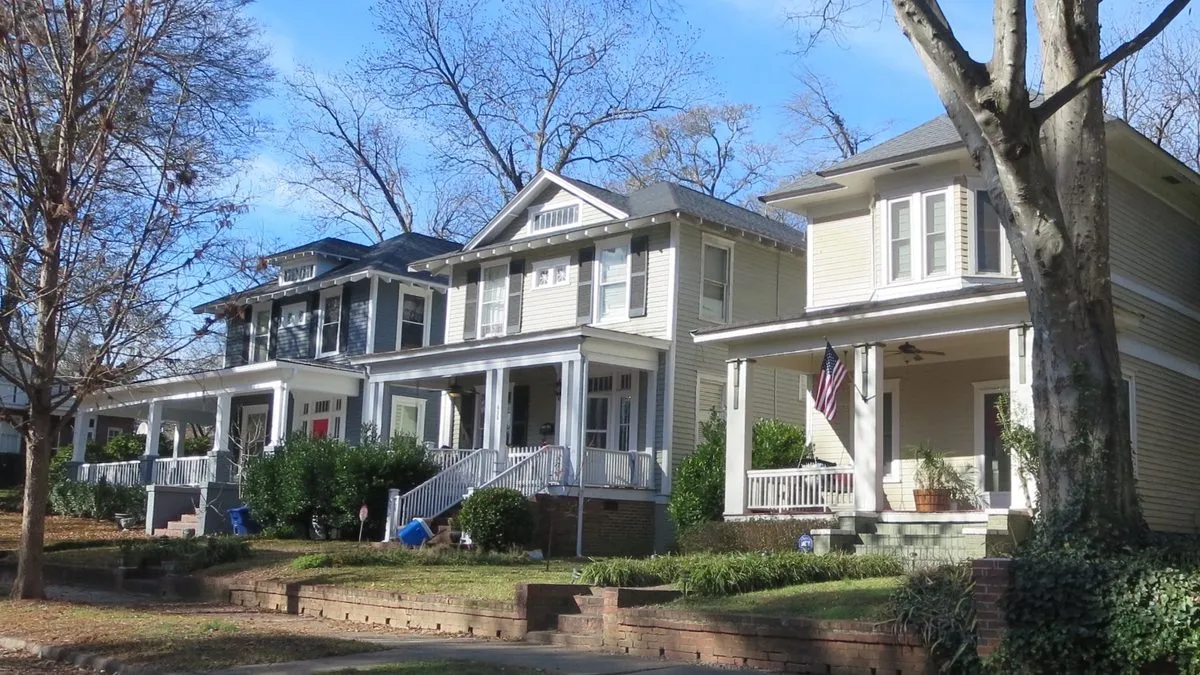
Cover photo: "Converse Heights houses" by PegasusRacer28, via Wikimedia Commons, CC BY-SA 4.0.