Credit Card Debt Is Near Record Highs — How Homeowners Pull That Stress Off the Paycheck
Credit Card Debt Is Near Record Highs — How Homeowners Pull That Stress Off the Paycheck
If you're searchingcredit card debt near record highs home equity, you're not imagining the crunch. Card and revolving balances are near record highs — and a lot of families feel it every time the paycheck hits.
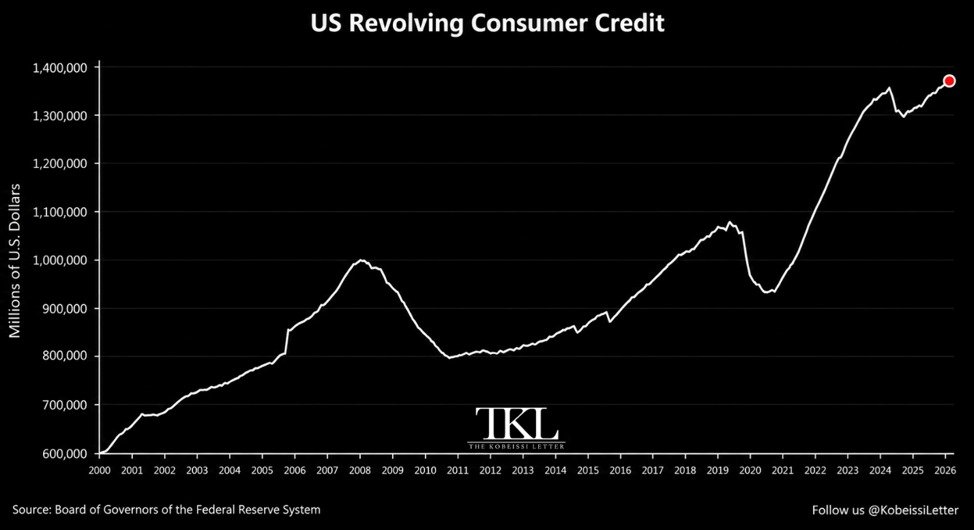
As of late September 2026,The Kobeissi Lettercalled out the latest surge: total consumer credit jumping again, and revolving credit — the bucket that includes credit cards — hitting a new record. That's not some distant econ chart. That's more of your money leaving every month as interest to the banks.
For a lot of homeowners with equity, the practical move is simple:use home equity to pay off credit card debt— roll those high-interest balances into a home-equity path, free up the month, and get that weight off your shoulders. Room for life, investing, vacations — instead of working hard all month just to feed the interest.
I'm Jim Duffy. ALCOVA Mortgage. South Carolina, Georgia, and Florida — not nationwide. Estimate path first. Not a rate quote.
How it feels when the cards own the paycheck
You know the rhythm.
Paycheck hits. House payment leaves. Then the cards — minimums that barely move the balance — take another bite. Stack two or three of them and the month starts disappearing before groceries, before savings, before anything fun.
Vacation talk starts... then stops. "Invest for the future" sounds like a joke when there's nothing left to invest with. You're making decent money. Still feels like the banks own week three.
That's the stress. Not "I don't earn enough." It's a paycheck that's already claimed — high-interest revolving debt sucking you dry every month.
Debt eliminationis what a lot of people are really after when they search this stuff. Not a prettier spreadsheet. The feeling: weight off the shoulders. Room in the month. Cash flow you can actually keep.
If home equity can help wipe out the cards and change how the monthfeels, we should look at it. If it can't, you should know that too — without a weekend of applications.
What the numbers mean (plain English)
Here's the plain read fromThe Kobeissi Letter(late September post flagging theJulyFed numbers — Board of Governors data in their chart) — estimate framing for your household, not a lecture.
InJuly, total consumer credit surged+$18.1 billion, to arecord $5.19 trillion. That follows +$14.6 billion in June and marks the13th consecutive monthly increase.
Revolving credit, which includes credit cards, jumped+$2.8 billion, to arecord $1.36 trillion.
Non-revolving credit (auto and student loans) rose +$15.3 billion, to $3.83 trillion — also an all-time high, and the biggest monthly jump there since March 2025.
Kobeissi's line: US consumers are "fighting" inflation with more debt. What that means for a family in Charleston, Atlanta, Tampa, Greenville — anywhere we lend:
Minimums stay high even when you're "current"
Balances move slow because most of the payment is interest
The month never quite opens up — even when income is fine
More households are carrying this load at the same time, so you're not uniquely "bad with money"
It's astructureproblem. Too much of what you earn is spoken for by expensive revolving debt. Income is what hits the account. Cash flow is what's still yours after every bill that cannot wait. Same idea asyou make good money and still feel broke.
I'm not going to invent card APRs or promise a magic rate here. Your statements and a real estimate beat brochure math every time.
The practical path: use equity to wipe out the cards
North star for FreeUpCashFlow:homeowners with significant credit card debt use home equity to free monthly cash flow and start building wealth— the stair-step into the Asset Accelerator idea. First free the month. Then redirect what used to go to the banks toward life and assets.
You don't have to lead with the product. But once the feeling and the month make sense, you'll want the fork.
Cash-out refinance— replace your current mortgage with a new, larger one. Old loan paid off. Cards (and other high-interest balances you choose) can get paid at closing so the money doesn't sit in checking and "maybe" get used later. One house payment. Can fit when your current rate isn't one of thosesuper low 2020–21rates you're protective of, you want one payment, and the new payment after wiping out the cards frees real cash flow. This page is the news-peg / cash-flow frame — the deep cash-out product walkthrough lives here:cash-out refinance to pay off credit cards.
Keep your first mortgage (home equity loan or HELOC)— leave a great first rate alone. Borrow what you need against equity to clear the revolving balances. Two housing-related payments; combined total should still breathe easier. Prefer this when the first rate is cheap money worth keeping — wipe out / clean up the cardsaroundthe mortgage, not blow it up. Side-by-side of the fork:HELOC vs cash-out. Pause checklist:when NOT to cash-out refinance.
Either way, say it plainly: you'removingunsecured card debt onto a home-secured product. Miss the new payment and the house is in play — not just your credit score. That trade can still be a big win when the interest relief is real, the new payment fits your life, and you don't reload the cards.
Closing costs matter too. Rough gut-check lives inrefinance break-even for debt consolidation— costs ÷ monthly cash freed up ≈ months until the cleanup pays for itself on cash flow alone.
And the bigger FreeUp frame — free the month, keep what you earn — is here:free up monthly cash flow with home equity.
When the month can actually move
Equity-for-cards tends to fit when:
Card / revolving minimums are what's crushing the paycheck — and you can feel it
You've got enough equity to work with and still leave a cushion in the house
You're ready to stop running the cards back up after they're wiped out
You'd rather write one payment (or a first + sized second) than chase five due dates
The freed-up cash flow would change how the month feels — vacation, invest, breathe — not just look neat on a spreadsheet
When to wait (or pick a different path)
After honest inputs, the calculator barely frees anything
You'd have to borrow almost every dollar of equity to make it work
You're about to sell or move before break-even makes sense
You still have a rock-bottom first rate and a second loan would clear the cards without touching it
The plan only works if the cards stay at zero forever with no change in spending
A clear "not worth it" is useful. It's cheaper than a loan that only looks good on the first statement.
After the wipe-out: keep the cash flow (stair-step to wealth)
This is the part that decides whether debt elimination sticks — and whether FreeUp feeds the Asset Accelerator stair-step.
If the cards are gone and an extra few hundred (or more) shows up in the month, that money will go somewhere. Intentionally — breathing room, a vacation you stopped canceling, an investment contribution that finally happens — or accidentally back onto the cards.
I can't police anyone's spending. I can be honest:rolling high-interest balances into home equity only helps if the month changes for good.Redirect what used to go to the banks toward your life and, over time, toward assets. That's the FreeUp → Asset Accelerator ladder in one sentence: free the cash flow, then put it to work.
Cards go to zero at closing... then climb again... and now you have mortgage debtandnew card debt. Worst version of the story. Don't do that to yourself.
Run the estimate before you apply
Before you shop rates or waste a weekend on applications:
1. Add up card / revolving balances and minimums (and any other high-interest debts you'd include).
2. Note home value and mortgage balance.
3. Compare what leaves the account every month now vs a cash-out path and a keep-your-rate path (first mortgage stays, second for the cards).
4. Be honest about what you'd do with freed cash flow — breathe and invest, or just run the cards back up.
Run the FreeUpCashFlow estimate →
About a minute.Estimate ≠ quote.Closing costs, taxes, insurance, credit, appraisal, SC attorney norms, and program rules all change the real number. Stretching debt over more years can mean more total interest even when the monthly payment drops.
What you get for that minute: whether this could free real money in your month — the kind you feel — or whether you should leave the house alone.
SC / GA / FL homeowners — licensed talk-through
I lend where ALCOVA / FreeUpCashFlow originates:South Carolina, Georgia, and Florida. Not nationwide.
If the estimate looks strong — the month actually moves — we talk: cash-out vs keeping your rate, 30-year vs matching remaining term, how much equity to leave, whether cards get paid at closing, and what closing looks like in your state.
Same real question under the news headlines:what would it take for your paycheck to go further — and for that weight to come off your shoulders?
FAQ
Is credit card debt really near record highs right now?
Elevated — yes. Recent reporting as of September 2026 (includingThe Kobeissi Letter) shows revolving credit near or at record levels, and household credit-card balances have been near highs in recent Fed-style releases. Exact headline numbers move quarter to quarter; the homeowner takeaway is the same: a lot of families are carrying expensive revolving balances that eat the paycheck.
Can I use home equity to pay off credit card debt?
Often that's the whole point of a cash-out, home equity loan, or HELOC used for debt elimination — when equity, credit, income, and program guidelines support it. Still secures the debt with your home. For the deep product path (not this news-peg page):cash-out to pay off credit cards.
Should I cash-out refinance or keep my low first mortgage rate?
If you locked a super low 2020–21 rate (or anything you're protective of), lean hard toward leaving that first mortgage alone and cleaning up revolving debt with a HEL or HELOC. Cash-out can still win when the first rate isn't precious and one payment plus freed cash flow beats the keep-your-rate path. Map the products first onHELOC vs cash-out, then the pause checklist onwhen NOT to cash-out.
Will consolidating cards into my mortgage free up cash flow?
It can — when high-rate revolving balances are crushing the month, you leave equity cushion, and you don't reload the cards. Look ateverything that leaves the account, not one prettier line item. Run real balances through theFreeUpCashFlow calculator. Estimate ≠ quote.
What should I do with the cash flow after the cards are gone?
Keep it. Breathing room first. Then life, vacations, and investing — the stair-step toward building wealth instead of shipping interest to the banks. That's FreeUp feeding the Asset Accelerator idea. Habit change is the difference between a win and stacking new card debt on top of a bigger house loan.
---
Want to see what your month could look like without those card minimums?
Run the FreeUpCashFlow calculator →
Takes about a minute. If you can already feel what that cash flow would mean, we talk. If you can't, you know — without the paperwork.
Jim Duffy
Loan Officer, ALCOVA Mortgage
NMLS #35122
(843) 735-0865
---
Compliance:Estimate only — not a rate quote, commitment to lend, application, or offer of credit. All loans subject to credit approval, income and property verification, and program guidelines. Rolling consumer debt into a mortgage or home-equity product secures that debt with your home. Estimates compare current monthly payments to an illustrated new payment and do not show total interest over the life of the loan, which may be higher when balances are spread over a longer term. Freed monthly cashflow ≠ lower total interest over the life of the loan. Macro / Fed / news figures cited for context only and are not a guarantee of any borrower's outcome. Available where ALCOVA Mortgage / FreeUpCashFlow originates in South Carolina, Georgia, and Florida. Equal Housing Lender. ALCOVA Mortgage, LLC, NMLS #40508. Jim Duffy, NMLS #35122. (843) 735-0865.